
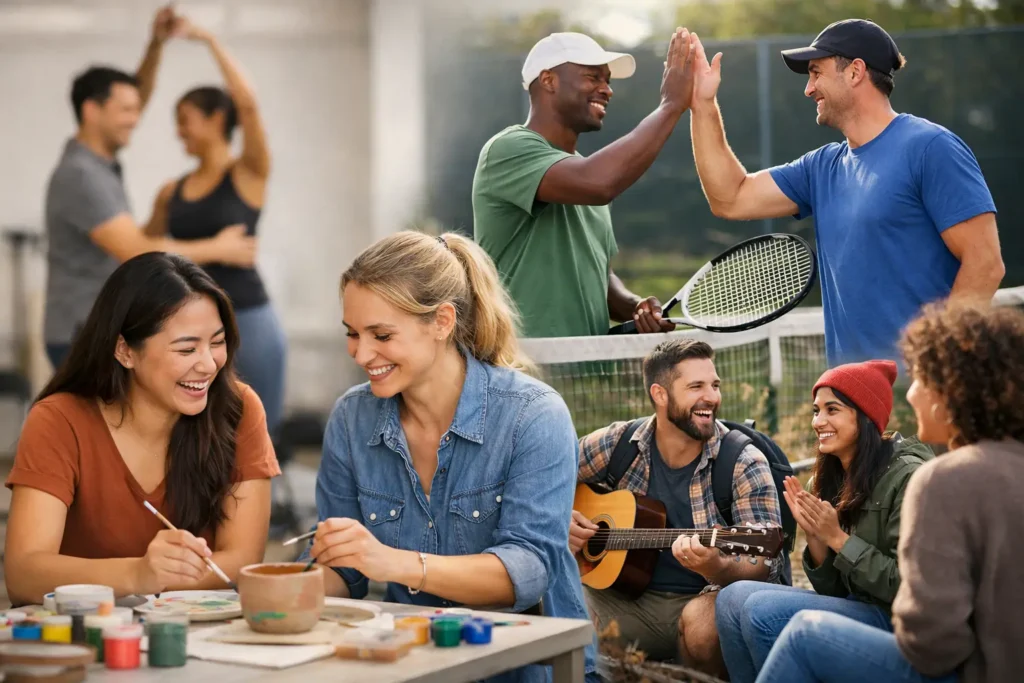
If you’ve ever moved to a new city and realized making friends as an adult feels oddly harder than finding an apartment, you’re not imagining it. The best hobbies for new friendships work because they take the pressure off. Instead of forcing small talk out of nowhere, they give you something shared to do, react to, laugh about, and come back to next week.
That matters more than people think. Friendship usually doesn’t begin with a perfect introduction. It starts with repeated, low-pressure contact and a bit of familiarity. A good hobby creates both. The trick is choosing one that makes conversation feel natural and gives people a reason to see each other again.
What makes the best hobbies for new friendships?
Not every hobby is equally social. Some are enjoyable but solitary. Others put you around people without really helping you connect. The best hobbies for new friendships tend to have a few things in common: they happen regularly, they attract a mix of people, and they make interaction part of the experience rather than an awkward extra.
A hobby also needs the right social pace. If it’s too intense, it can feel cliquey or intimidating when you’re new. If it’s too unstructured, everyone may drift in and out without actually talking. The sweet spot is an activity where showing up is easy, participation is shared, and conversation has natural openings.
That’s why hobby choice matters so much when you’re rebuilding your social life. You’re not just picking something fun. You’re picking a setting where connection has a chance to grow.
1. Group fitness classes
Yoga, spin, Pilates, boxing, strength training, and run clubs all make it easier to meet people without needing to be the most outgoing person in the room. There’s already a shared rhythm to the experience. You show up, do the class, and usually have a few minutes before or after to chat.
What makes fitness especially useful is repetition. You start seeing the same faces, and familiarity lowers the social barrier fast. Even a simple “You coming to the Thursday class too?” can turn into coffee after a workout a few weeks later.
The trade-off is that some classes are more social than others. A big anonymous studio may be great for exercise but not ideal for conversation. Smaller classes and community-led run groups tend to work better if friendship is part of the goal.
2. Recreational sports leagues
If you want built-in teamwork, casual sports are hard to beat. Think kickball, pickleball, soccer, volleyball, softball, or climbing groups. You don’t need to be especially skilled. In fact, beginner-friendly leagues often create stronger bonds because nobody is trying to prove too much.
Team sports give people a reason to interact beyond introductions. You coordinate, encourage each other, joke around, and often grab food or drinks afterward. That mix of activity and downtime is where a lot of new friendships start.
This option works best if the culture is welcoming. Some leagues feel more competitive than social, so it helps to look for ones that openly market themselves as beginner-friendly or community-centered.
3. Cooking classes and supper clubs
Food is one of the easiest social bridges there is. Cooking classes give people a shared task, plenty to comment on, and a natural ending point where everyone sits down and enjoys the result. That creates a warmer, less formal kind of interaction than many networking-style events.
Supper clubs can work in a similar way, especially for people who prefer conversation over competition. There’s something grounding about preparing, sharing, or discussing food together. It makes a new city feel less anonymous.
The main thing to watch is consistency. A one-time class can be fun, but recurring workshops or regular gatherings are usually better for turning a good evening into an actual friendship.
4. Language exchange groups
For expats, travelers, and anyone living in an internationally mixed city, language exchange groups can be surprisingly effective. People usually arrive open to meeting others, and there’s already a built-in reason to talk. You’re not trying to invent a conversation topic from scratch.
These groups also tend to attract people in a similar life stage: new to the area, curious, and open to connection. That’s a strong combination when you’re trying to build community.
It does depend on what you want. If the group is too focused on language practice alone, relationships may stay surface level. But when people linger after the event or suggest meeting again, that’s when it becomes much more than practice.
5. Book clubs
Book clubs are ideal for people who like slower, more thoughtful connection. You don’t need to be loud or instantly charming. You just need to show up with opinions, questions, or even a strong dislike of the book everyone else loved.
What makes book clubs work is that they create meaningful conversation quickly. You skip a lot of the usual small talk and get into values, emotions, humor, and perspective. That helps people feel known faster.
Of course, not every club is equally open. Some are tightly established, while others are actively looking for new members. A newer or more casual group often feels easier to join.
6. Volunteering
If you want friendship with a sense of purpose, volunteering is one of the strongest options. Whether it’s a community garden, food distribution, tutoring, animal rescue, or neighborhood cleanup, you’re meeting people while doing something that matters.
Shared purpose changes the tone of interaction. People are often kinder, more grounded, and more willing to work together. That can make volunteering feel especially good if you’re new somewhere and want connection that feels genuine rather than forced.
The best setup is ongoing volunteer work instead of one-off events. Repeated contact is what turns familiar faces into real friends.
7. Creative workshops
Pottery, painting, photography walks, improv, dance, and writing groups all offer the same basic social advantage: they give people something to make, respond to, and talk about. You’re not just standing around introducing yourself. You’re engaged in a shared experience.
Creative hobbies are also great for people who don’t love highly structured social settings. There’s usually room for conversation, but silence doesn’t feel strange either. That balance can be a relief if you’re feeling socially rusty.
Some creative spaces are more community-oriented than others. A drop-in class might be fun, but a recurring workshop usually gives relationships more room to grow.
8. Hiking and walking groups
Walking side by side is one of the easiest ways to talk to someone new. There’s less intensity than sitting face-to-face, and the environment gives you plenty to comment on. That’s why hiking groups, city walking clubs, and weekend nature meetups often feel more relaxed than traditional social events.
They’re also appealing if you want connection without too much noise, expense, or pressure. You get movement, fresh air, and a clear shared plan.
The only catch is logistics. If the group meets infrequently or in hard-to-reach places, it can be tougher to build momentum. Regular neighborhood walks often do more for friendship than occasional big outings.
9. Board game nights
Board game groups are social by design. They give people an immediate shared focus, clear roles, and lots of little moments for humor and interaction. For many adults, especially those who feel awkward at purely conversational meetups, that structure is a gift.
Games also make it easy to return. If you had a good time with a group once, it feels natural to come back again, and that repeat contact really matters.
It helps if the group welcomes beginners and rotates tables or teams. A very experienced, insular group can feel harder to break into.
10. Coworking community events
For remote workers and freelancers, loneliness often hides in plain sight. You may be busy all day and still feel disconnected. Coworking spaces, creator meetups, and work-adjacent social events can help because they bring together people with similar routines and challenges.
You already have a few easy conversation starters: work setup, neighborhood cafés, flexible schedules, client chaos. But the best versions aren’t just networking in disguise. They include casual breakfasts, interest groups, workshops, or after-work hangouts where friendship has room to happen.
That difference matters. If everyone is there to pitch themselves, the vibe changes. The stronger communities are the ones where professional overlap leads to actual human connection.
11. Community-led local meetups
Sometimes the best hobby isn’t a single hobby. It’s a social format built around shared interests, like brunch clubs, trivia nights, museum visits, casual soccer in the park, or weekend coffee walks. These work well because they meet people where they already are.
For adults rebuilding a social life, flexibility matters. Maybe you love art one week and want a hike the next. Maybe your schedule changes often. Community-led meetups make friendship feel more accessible because you don’t need to reshape your whole life to participate.
This is where a platform like Hyve can help, especially if you’re new and don’t know where to start. When people connect through shared interests and nearby activities, meeting up feels much more natural than endless chatting with no plan.
How to choose the right hobby for you
The best option is not always the most social one on paper. It’s the one you’ll actually keep doing. If you hate competitive environments, a sports league may not help much even if it’s full of people. If you love quiet conversation, a book club or walking group may suit you better.
It’s also worth thinking about timing. Weekly hobbies are usually better than monthly ones if your goal is friendship. Frequency creates familiarity, and familiarity makes follow-up easier.
Finally, choose hobbies that leave room around the edges. The class, game, or activity matters, but the real friendship-building often happens before it starts, after it ends, or when someone says, “Want to come again next week?”
You do not need a huge social circle overnight. You just need a few places where showing up feels easy, and where seeing the same people again is part of the rhythm. That’s often how a new city starts feeling less like somewhere you live and more like somewhere you belong.