
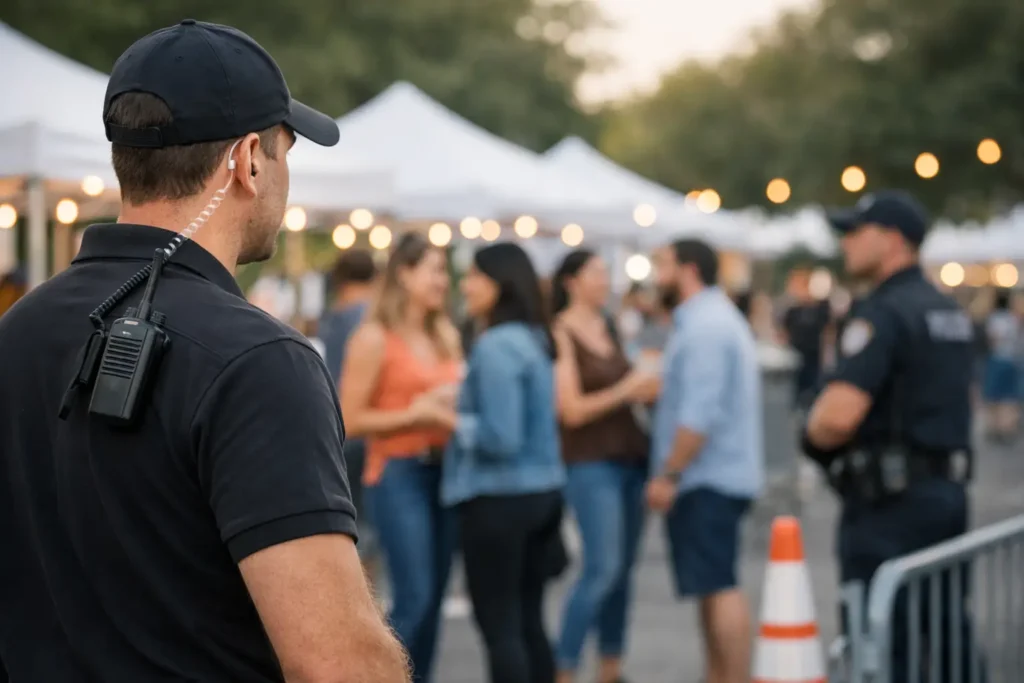
A great local meetup can make a new city feel smaller in the best way. You arrive not knowing anyone, find a shared interest, and leave with a name to text next week. Local event safety helps create the conditions for that kind of connection: open, relaxed, and grounded in a few sensible choices.
Meeting new people always involves a little uncertainty, especially when you are new to town, working remotely, or rebuilding your social circle after a move. That does not mean you need to treat every coffee meetup or walking group as a risk assessment. It means giving yourself enough information, options, and boundaries to focus on the reason you came: enjoying the activity and seeing who you click with.
Local Event Safety Starts Before You Go
The simplest safety choices happen before you leave home. When you are considering an event, read the description closely. A clear host usually explains the plan, location, approximate timing, cost, and what participants can expect. Vague details are not automatically a red flag, but they are a reason to ask a question before committing.
Choose public venues for first-time gatherings whenever possible. A busy cafe, park, museum, market, community studio, or established restaurant gives everyone a natural, low-pressure setting. For an outdoor activity, check the route, weather, daylight hours, and whether there is a clear meeting point. If the plan changes from a public place to a private home at the last minute, it is completely okay to pass.
A little research can also lower your nerves. Look at the venue’s location, decide how you will get there and get home, and aim to arrive close to the stated start time. You do not need to share your whole evening schedule, but telling a friend where you are going can be reassuring. A quick message such as, “I’m trying a board game meetup downtown and should be home around 9,” is enough.
For people using a friendship or community app, keep early conversations on the platform until you are comfortable. Profiles, shared interests, event history, and mutual attendees can offer useful context. On Hyve, activity-based plans can make that first interaction feel less intense because there is already something to do and talk about together.
Set Yourself Up to Feel at Ease
Safety is not only about avoiding a bad situation. It is also about making choices that help you stay present. When you know you can leave easily, you are more likely to relax and enjoy meeting people.
Plan your own transportation, particularly for a first event. Driving yourself, using public transit, walking a familiar route, or booking your own ride gives you control over your departure. Accepting a ride from someone new is not always unsafe, but it removes an easy option if you decide you would rather leave early. The trade-off is simple: independence may cost a little more or require more planning, but it often buys peace of mind.
Keep your phone charged and bring only what you need. If you are meeting after work, consider carrying a portable charger. Save the venue address, have a backup route home, and keep your valuables close in crowded spaces. These are ordinary habits, not signs that you expect something to go wrong.
It also helps to give yourself a realistic goal. Instead of putting pressure on yourself to make a best friend in one night, aim to stay for 45 minutes, introduce yourself to two people, or try the activity once. A small goal makes the event feel manageable. If the vibe is good, you can stay longer. If it is not, you have still done something brave for your social life.
Share only what feels right
New friendships grow through openness, but openness does not require instant access to your personal life. You can talk about your favorite neighborhoods, your work in broad terms, the reason you moved, or what you are hoping to explore next. You do not need to share your home address, financial details, daily routines, or private information to be friendly.
The same applies to photos and social media. If someone asks for your number or account and you would rather wait, a warm response works well: “I’d love to get to know everyone a bit more first. Let’s stay connected through the group for now.” The right people will respect that without making it awkward.
During the Meetup, Trust the Signals You Notice
Most community events are made up of people who are there for the same reason you are: to do something enjoyable and meet others. Still, pay attention to how the event is being run and how your body feels in the space.
A thoughtful host welcomes newcomers, explains the plan, and makes it easy for people to participate without pressure. They do not need to be perfect or overly formal. But a basic level of organization matters, especially for larger gatherings, hikes, sports activities, or events where alcohol is involved. If the organizer dismisses reasonable questions, pressures guests to stay, or repeatedly changes the plan without explanation, you are allowed to step away.
Be mindful with food and drinks, too. Keep an eye on what you are consuming, know your limits, and do not feel obliged to match anyone else’s pace. Alcohol can be part of a social event, but it should not be the price of belonging. The best communities make room for the person having sparkling water, the person leaving early, and the person who wants to take things slowly.
If you feel uncomfortable, you do not need a dramatic reason to leave. You can say you have an early morning, need to catch your train, or simply head out after thanking the host. A prepared line takes the pressure off in the moment: “It was lovely meeting everyone. I’m going to head out, but I hope you have a great rest of the evening.”
Look out for others without taking over
Community safety works best when it is shared. If someone appears lost, overwhelmed, or separated from their group, a simple check-in can change their night. Ask whether they know where the group is meeting, offer to walk them back to the main area, or introduce them to someone nearby.
That does not mean becoming responsible for everyone else’s choices. It means noticing the small opportunities to be kind. The strongest local communities are not built on suspicion. They are built on clear boundaries, mutual respect, and people who make space for one another.
For Hosts, Safety Is Part of Making People Feel Welcome
If you create local activities, remember that first-time attendees may be more nervous than they appear. A clear event description goes a long way. Mention the exact location, start and end times, expected cost, accessibility details, group size, and what people should bring. For a walk or outdoor plan, include the distance and pace. For a restaurant meetup, say whether people will be paying separately.
Choose a visible meeting point and send updates through the event channel rather than asking people to share personal contact details. At the start, briefly introduce the plan and let everyone know it is fine to take breaks or leave when needed. For bigger events, asking a trusted co-host to help welcome arrivals can keep no one from being left on the edge of the group.
The goal is not to make a casual event feel restrictive. It is to remove unnecessary uncertainty. When people know what to expect, they can show up as themselves.
Connection Gets Easier When You Keep Your Boundaries
You may not find your people at every meetup. Sometimes the conversation is pleasant but brief. Sometimes the activity is not your thing. Sometimes you leave feeling proud simply because you went. All of those outcomes count.
The right local event should leave you feeling more connected to your city, not less in control of yourself. Make a plan you are comfortable with, listen to your instincts, and give good people the chance to meet the real you. A new friendship often begins with something very ordinary: showing up, saying hello, and knowing you can do both safely.