
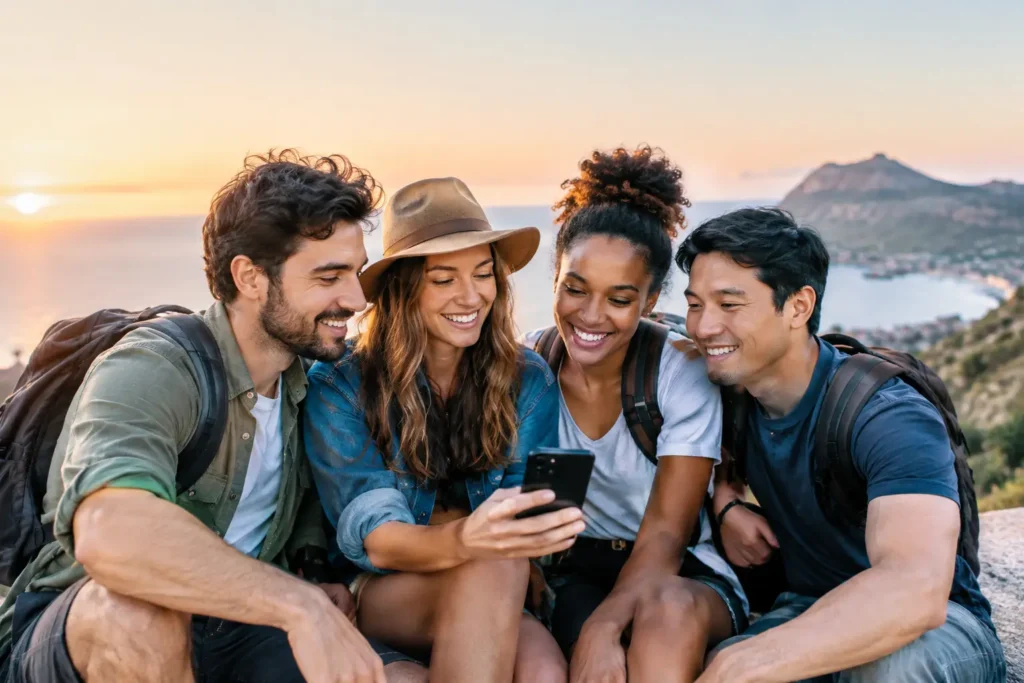
You have arrived, dropped your bag at the hotel or apartment, and realized that seeing a city alone feels very different from feeling part of it. The top friendship apps for travelers can help bridge that gap, especially when you want more than restaurant recommendations or another night scrolling in your room.
The right app depends on the kind of connection you are looking for. A weekend visitor may want someone for a museum visit or a group dinner. A digital nomad staying for a month may be looking for workout buddies and familiar faces. An expat building a life in a new city may need friendships that grow beyond the first coffee.
What matters most is choosing a platform that makes meeting in person feel natural, safe, and low-pressure.
What makes a friendship app useful while traveling?
Travel can make people more open to connection, but it also comes with practical limits. You may have only a few days in town, an unpredictable schedule, or no idea which neighborhoods feel comfortable. A good friendship app helps you move from “Anyone want to hang out?” to a clear shared plan.
Look for apps that center activities, interests, or local events. It is easier to meet someone when there is a reason to get together: a casual hike, language exchange, board game night, run club, coworking session, or Sunday market visit. Shared activity gives the conversation somewhere to go and removes some of the pressure of meeting a stranger one-on-one.
It also helps to consider local activity. An app can have millions of users globally and still be quiet in the city you are visiting. Before investing much time, check whether people are actively posting events and responding nearby.
Top friendship apps for travelers to consider
Hyve for activity-based local friendships
Hyve is built for people who want to turn a new place into a social home. Rather than treating friendship like a swipe game, it helps people find others through shared interests, lifestyles, and nearby activities. You can discover like-minded people, create something you would genuinely enjoy doing, or join a local meetup already happening.
That approach works particularly well for travelers who are staying long enough to want a little routine, as well as newcomers, remote workers, and expats who do not want their social life to live entirely in a chat thread. A pottery class, park picnic, coworking afternoon, or casual dinner can be the beginning of a real local circle.
The trade-off is that activity-based apps work best where there is an active local community. If you are visiting a smaller destination for two days, you may need to be flexible about the type of activity or use an additional app alongside it.
Meetup for interest-led group events
Meetup is often a practical choice when you want a group setting rather than a one-on-one introduction. Depending on the city, you might find hiking groups, photography walks, professional communities, book clubs, language exchanges, tech gatherings, and social events designed for newcomers.
For solo travelers, groups can feel easier because you are not responsible for carrying the entire conversation. You can arrive, participate in the activity, and see who you naturally click with. It is also useful for longer stays because recurring groups give you a chance to see the same people again.
The experience varies widely by location and organizer. Some groups are warm and community-focused; others can feel more like formal networking events or one-off gatherings. Read the event description, look at the recent activity, and choose something aligned with how you actually like to spend your time.
Bumble For Friends for direct one-on-one plans
Bumble For Friends, often known as Bumble BFF, is designed for platonic connections. It can be a good fit if you prefer getting to know one person at a time and want to find someone with overlapping interests, whether that is brunch, live music, fitness, or exploring a neighborhood.
The familiar profile-based format makes it quick to start. Still, travelers may find that messaging can take longer than expected. When someone is only in town briefly, vague conversation often goes nowhere. Be transparent in your profile or first message: say how long you are visiting and suggest a simple public plan.
This option tends to work best in larger cities with a dense user base. It can also be especially helpful when you have a specific social need, like finding a fellow runner for an early-morning route or another remote worker to share a coffee break.
Couchsurfing for traveler-to-traveler community
Couchsurfing is known for hosting, but its community features have long attracted travelers looking to meet locals and fellow visitors. In many destinations, people use it to arrange casual hangouts, city walks, meals, and group events.
Its biggest strength is that users often arrive with a travel-minded attitude. They may be excited to swap stories, show someone their favorite neighborhood, or join a spontaneous plan. This can make it especially fun for short trips.
At the same time, expectations can be mixed. Some people use the platform for cultural exchange, some for accommodation, and others for social events. Keep your boundaries clear, meet in public first, and do not assume that a travel connection will automatically become a lasting friendship. Sometimes a great afternoon is simply a great afternoon.
Facebook Groups for niche local communities
Facebook Groups may not feel like a dedicated friendship app, but it remains useful for finding highly specific local communities. Search for groups tied to your destination and interests: expats in Chicago, women who hike in Denver, language exchange in Miami, remote workers in Austin, or local events for newcomers.
The advantage is range. You may find a community that is exactly right for you, including groups with regular offline events and active members who know the city well. The downside is that quality control differs from group to group, and conversations can get buried in busy feeds.
Use it as a discovery tool rather than a passive scroll. Introduce yourself briefly, share what you enjoy doing, and ask whether anyone is attending an upcoming event. Specificity gets better responses than a broad post asking who wants to be friends.
How to turn an app match into a real connection
Downloading an app is the easy part. The more meaningful step is making a plan that feels comfortable for both people. Start small and public: coffee near a busy area, a daytime walk, a group class, or a community event. A clear activity gives both of you an easy exit if the vibe is not right, while leaving room for the plan to continue if it is.
Be honest about your travel timeline. If you are leaving Sunday, say so. It is not awkward to be direct; it helps people suggest something realistic. Try a message like: “I’m in town through Sunday and would love to check out the farmers market or join a casual group walk. Are you free this weekend?”
You do not need to perform a perfect version of yourself either. The most promising friendships usually begin with something ordinary: both of you missing a good breakfast spot, wanting to try a beginner yoga class, or needing a reason to leave the apartment after work. Let your actual interests do the work.
A few safety habits that protect the good part
Meeting new people should feel exciting, not reckless. Keep first meetups in public places, tell someone you trust where you are going, and arrange your own transportation home. Avoid sharing where you are staying until you know someone better, especially when traveling alone.
Pay attention to whether a person respects simple boundaries. If they push to change a public plan to a private setting, pressure you to meet late, or make you feel guilty for saying no, you do not owe them more conversation. The right connection will make you feel more at ease, not less.
It is also worth remembering that friendship takes repetition. You might have a wonderful conversation that stays a travel memory, or you might meet someone who introduces you to a wider community. Both outcomes count. The goal is not to collect contacts in every city. It is to create more chances for the kind of shared moments that make a place feel a little less unfamiliar.
Wherever you land next, choose one plan that sounds genuinely enjoyable, show up with curiosity, and let the city introduce itself through its people.