
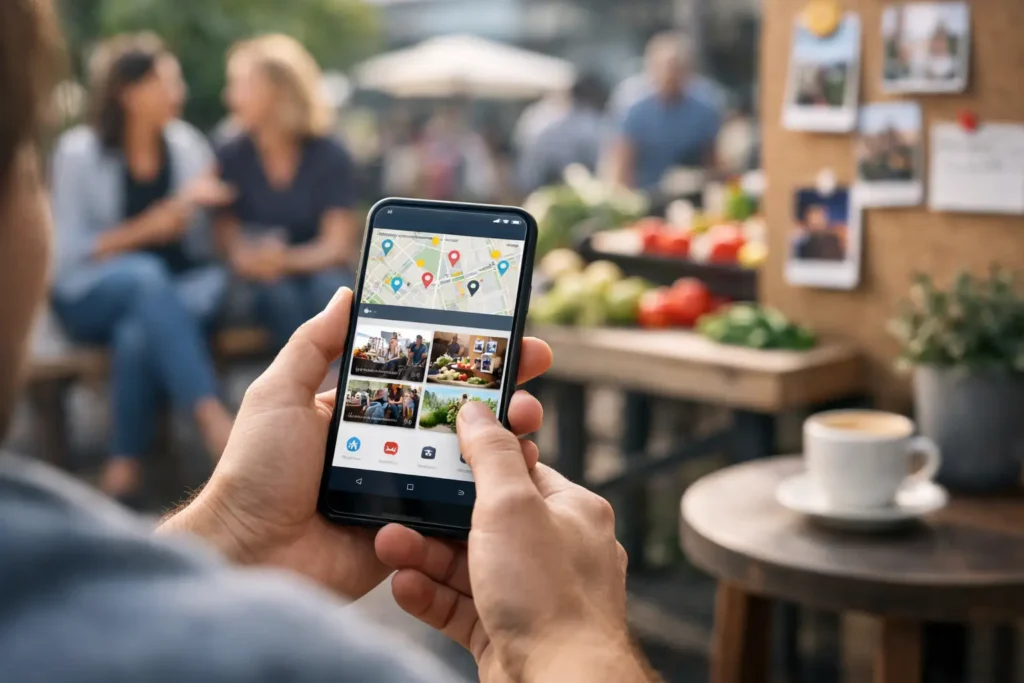
Moving to a new city can make even simple plans feel complicated. You know there are people nearby, events happening, and neighborhoods full of life, but actually finding your people is another story. That is where a local community app can make a real difference – not by giving you more people to scroll past, but by helping you step into real-world connection.
The best apps in this space do not just collect profiles. They reduce the friction that makes friendship feel harder as an adult. They help you go from, “I should get out more,” to “I’m meeting two people for coffee on Thursday and joining a run club on Saturday.” That shift matters, especially if you are new in town, working remotely, living abroad, or simply trying to rebuild your social life after a big change.
Why people look for a local community app
Most adults are not struggling because they do not want connection. They are struggling because modern life makes connection oddly inconvenient. Work can be isolating. Existing friend groups can feel closed. Dating apps are built for a different goal. Social media shows activity without necessarily creating belonging.
A local community app becomes useful when it solves a very specific problem: how do you meet people nearby in a way that feels natural, low-pressure, and worth leaving the house for?
For some people, that means finding a tennis partner, a hiking group, or a few people to try a new restaurant with. For others, it means rebuilding confidence after a move, a breakup, or a period of loneliness. The emotional need and the practical need are connected. People do not just want something to do. They want a way to feel at home.
What a good local community app actually does
A lot of platforms claim to build community, but the experience they create is often passive. You join, browse, maybe message someone, and then the momentum fades. A stronger model is activity-first and people-centered.
A good local community app helps users discover others through shared interests, not just location alone. Living in the same zip code does not mean you will click. Shared routines, values, hobbies, and energy matter more. Someone who likes early morning workouts, low-key dinners, and weekend museum visits is looking for a different social match than someone who wants nightlife and spontaneous plans.
It should also make action easy. If users have to do too much planning from scratch, many will stop before anything happens. The best experience shortens the path between interest and meeting up. That could mean simple event creation, easy RSVP flows, nearby activity discovery, and conversation prompts that feel human instead of forced.
Just as important, it should make friendship feel distinct from dating. That sounds obvious, but it is a major pain point for many people. Plenty of users want a social platform that does not come with mixed signals, performative chatting, or the pressure to present themselves a certain way. A community app works better when the intention is clear: meet people, do things together, and let connection grow from there.
The features that matter most
There is always a temptation to judge an app by how many features it has. In practice, fewer features with better focus often lead to stronger communities.
Discovery matters, but relevance matters more. If an app can surface nearby people and activities that genuinely match your interests and lifestyle, it saves emotional energy. You are not spending an hour filtering through people who are technically local but socially incompatible.
Activity creation is another key piece. Many adults are willing to join if someone else starts the plan, but they are also happy to host something simple when the process feels easy. Coffee meetups, language exchanges, park walks, coworking sessions, dinner groups, trivia nights – small plans often create the best first connections because they feel manageable.
Trust is essential too. If a platform wants people to meet offline, it has to support a sense of comfort. Clear profiles, transparent intentions, and community norms all help. So does a design that encourages real participation over anonymous lurking. People are far more likely to show up when the environment feels welcoming and grounded.
And then there is density. Even the smartest app struggles if there are too few active people in your area. This is the trade-off that users often notice quickly. A beautifully designed product with low local activity may feel disappointing. A simpler app with strong city-by-city momentum can be much more useful because it creates actual chances to meet.
Why offline connection should be the goal
The strongest local platforms understand a simple truth: messaging is not the end goal. It is the bridge.
That distinction changes everything. If an app is designed mainly to keep you engaged on-screen, it will reward browsing, chatting, and checking notifications. If it is designed to help you build a life in your city, it will reward participation. It will help you move toward plans, places, and shared experiences.
This matters because friendship usually forms through repetition and context. You meet someone at a casual dinner, then see them again at a weekend market, then invite them to another activity. Familiarity grows. Trust grows. The relationship starts to feel real because it is rooted in time spent together, not just messages exchanged.
For expats, remote workers, and newcomers, this kind of design is especially helpful. When you do not have built-in social structure from school, family, or an office, you need another route in. An app that leads to recurring local experiences can create that route.
What to watch out for when choosing a local community app
Not every platform that talks about community will help you find it. Some are too broad, which sounds inclusive but often creates weak matches. Others are too event-heavy without enough support for smaller, more personal plans. And some still carry the energy of dating culture, even if they are labeled differently.
A useful question is this: does the app make it easier to become part of local life, or does it just give you another feed to browse?
Look at whether the app supports real intent. Can you tell what people are there for? Can you join activities without awkward guesswork? Is it normal to meet in groups first, or does everything default to one-on-one chatting? These details shape how safe and comfortable the experience feels.
It also helps to consider your own personality and stage of life. If you are brand new to a city, a platform with group activities and broad interest categories may be ideal. If you have been in one place for a while but want more aligned friendships, a more curated, interest-based experience may work better. There is no perfect app for everyone. The right fit depends on whether the platform meets you where you are.
How a local community app can change everyday life
People often think of friendship apps as something extra, almost optional. But connection affects the shape of daily life more than we admit. It changes whether a city feels exciting or lonely. It affects mental health, confidence, routine, and even how willing you are to try new things.
When the right app works well, the change is not dramatic all at once. It is gradual and personal. You start recognizing faces. Your weekends feel less empty. You have people to text when you want company at a concert or a casual dinner. The city stops feeling like a place you happen to live and starts feeling like somewhere you belong.
That is why the best platforms do not treat community as a buzzword. They treat it as something built through small, repeatable moments – a shared walk, a class, a game night, a coffee after work. Hyve is part of that shift, helping people find like-minded locals and turn mutual interests into real plans.
A local community app will not do all the work for you. You still have to say yes, show up, and be open. But the right one can remove the hardest part, which is figuring out where to begin. And sometimes that is all it takes to make a new place feel less unfamiliar – one good plan, one easy conversation, and one familiar face at a time.
Pingback: How to Make Friends as a Digital Nomad - Hyve